New Curation
Guérir le Temps Atonal
Guérir le Temps Atonal
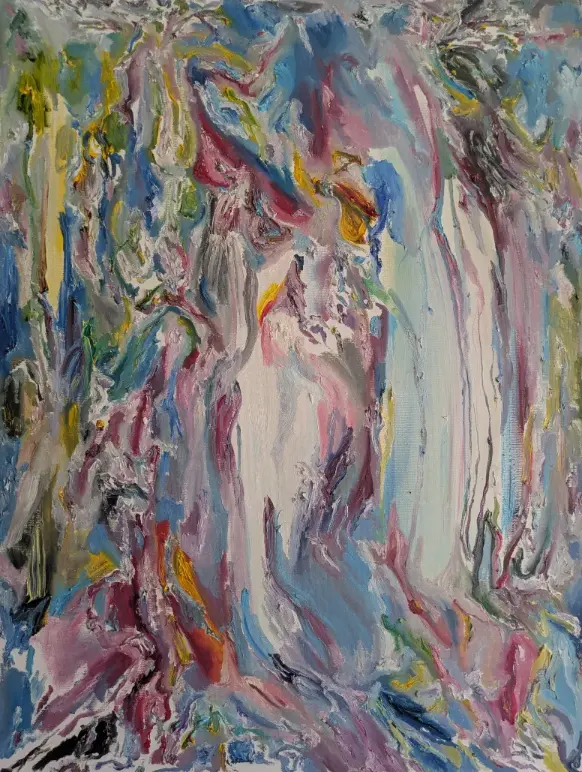
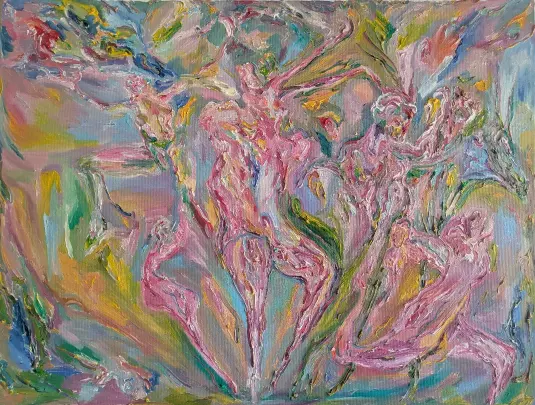
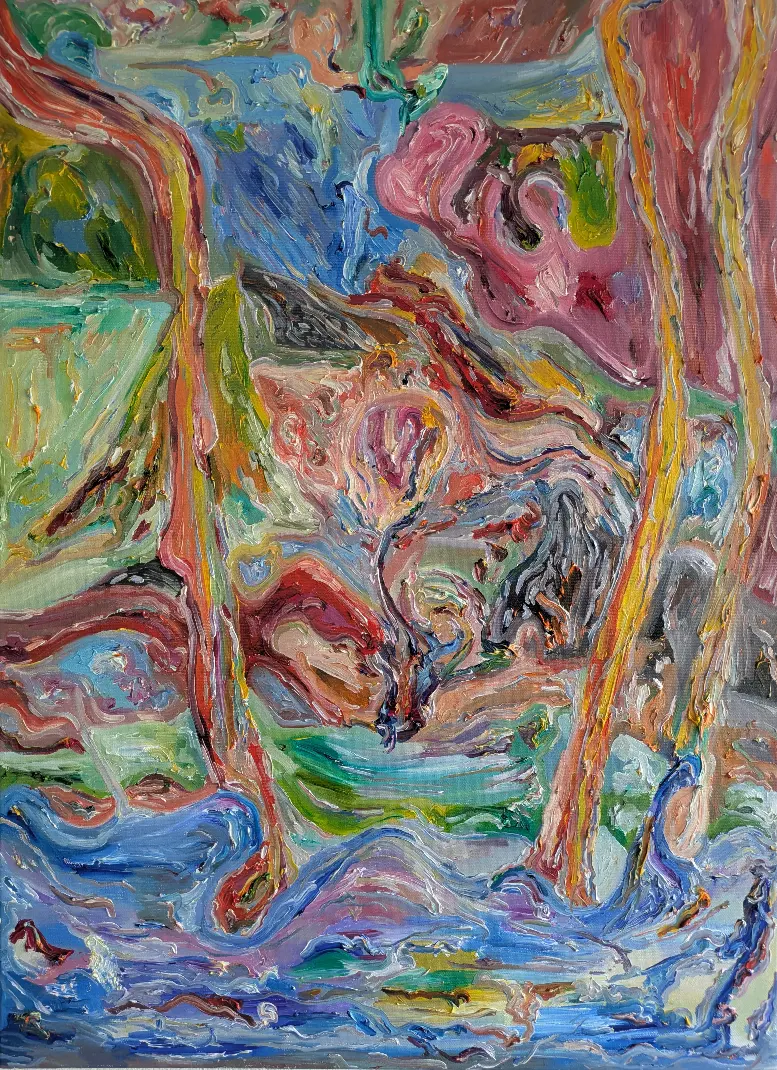
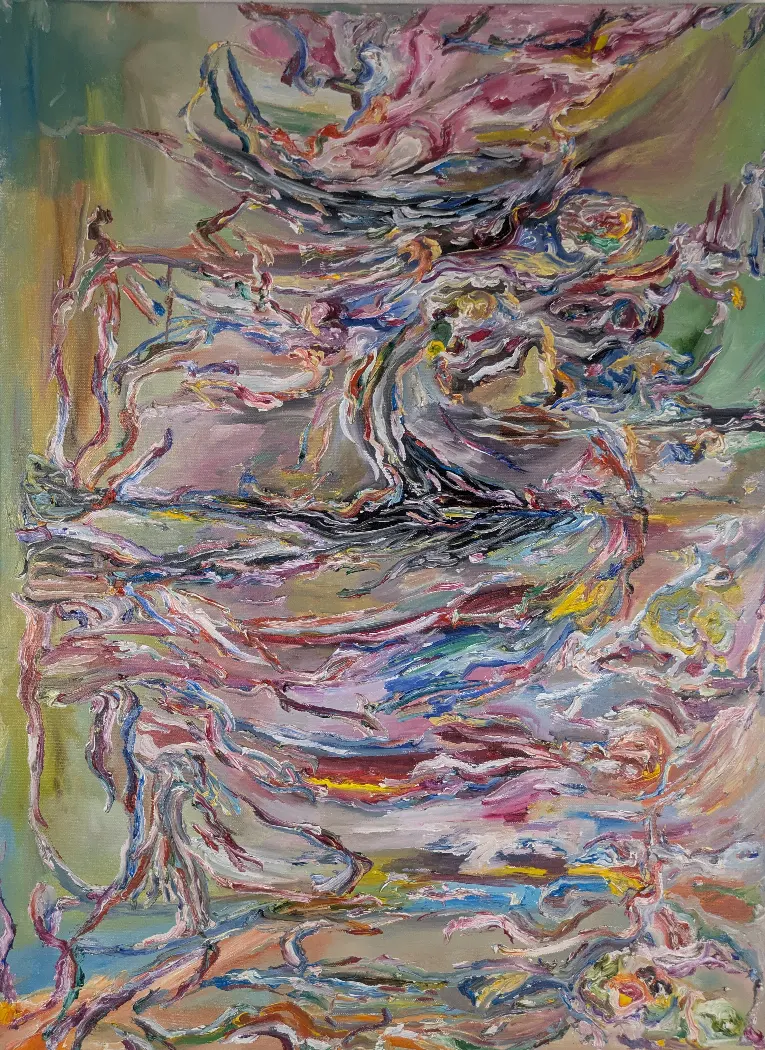
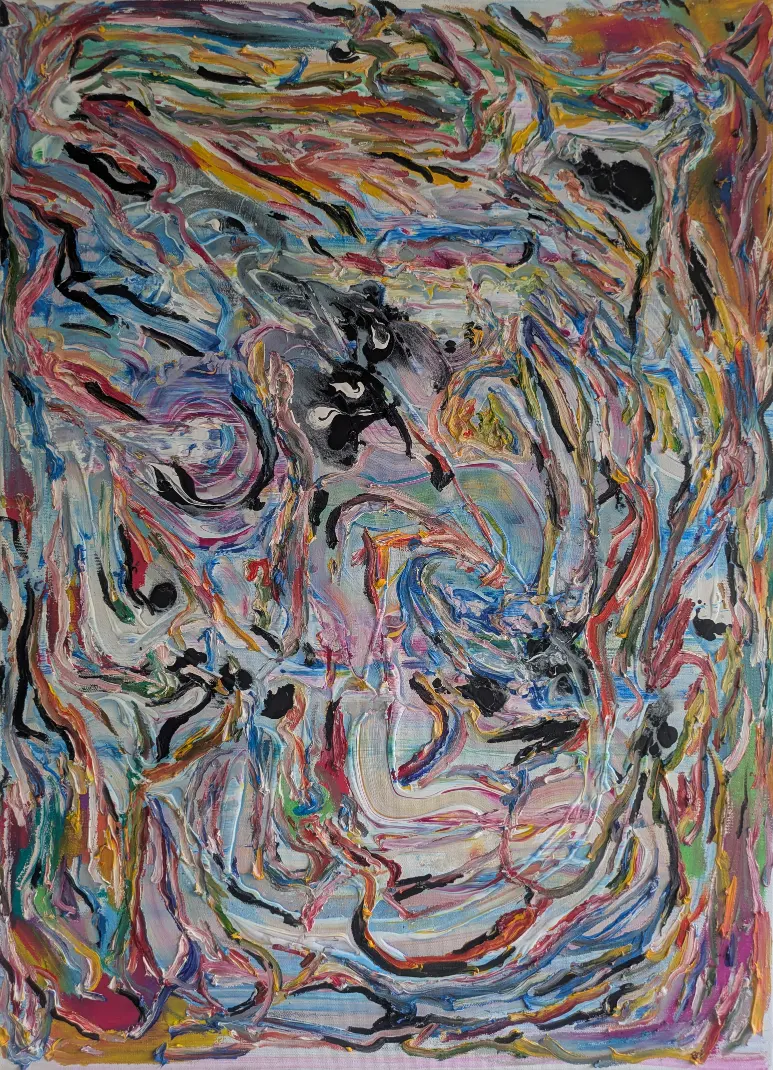
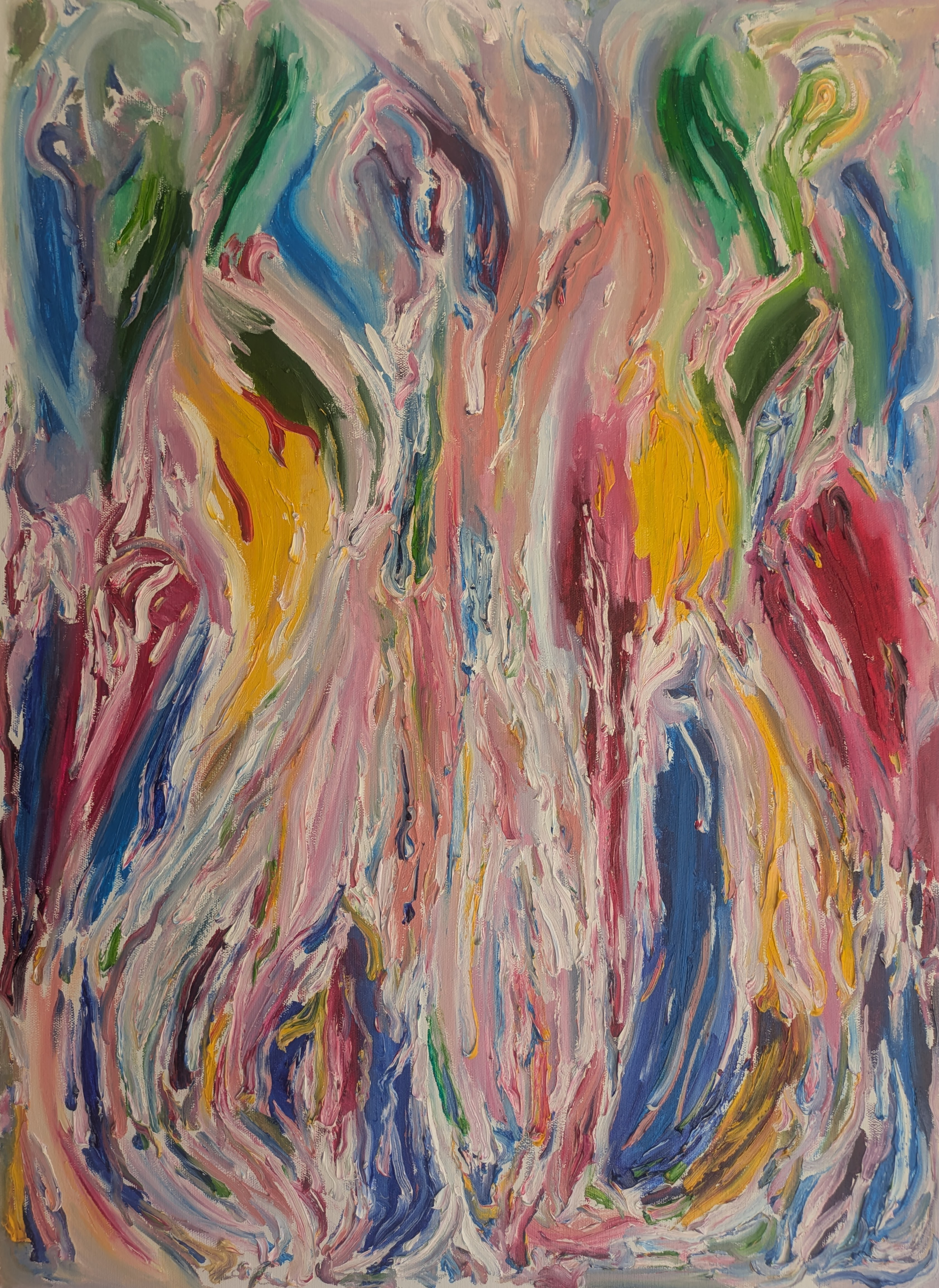
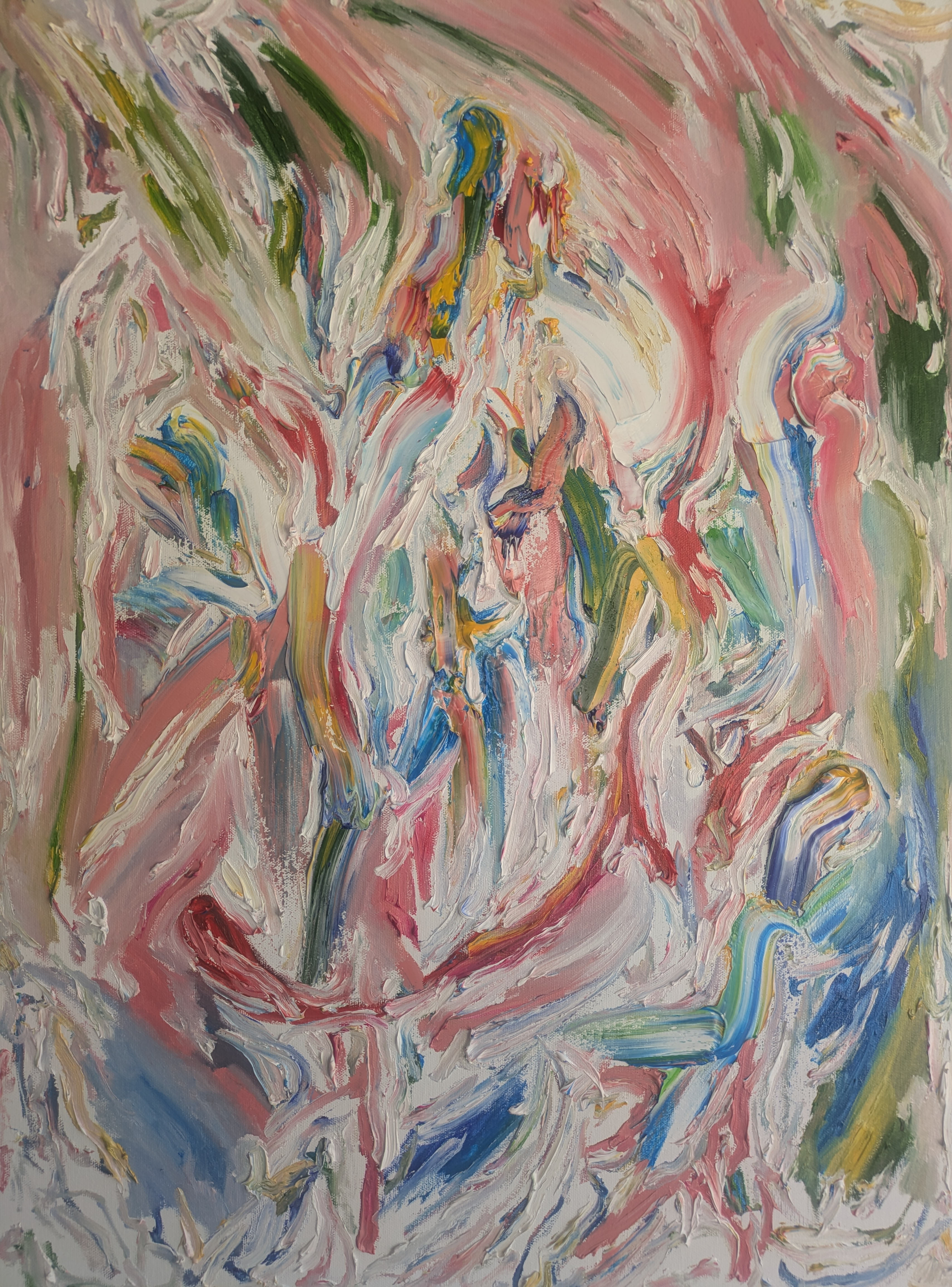
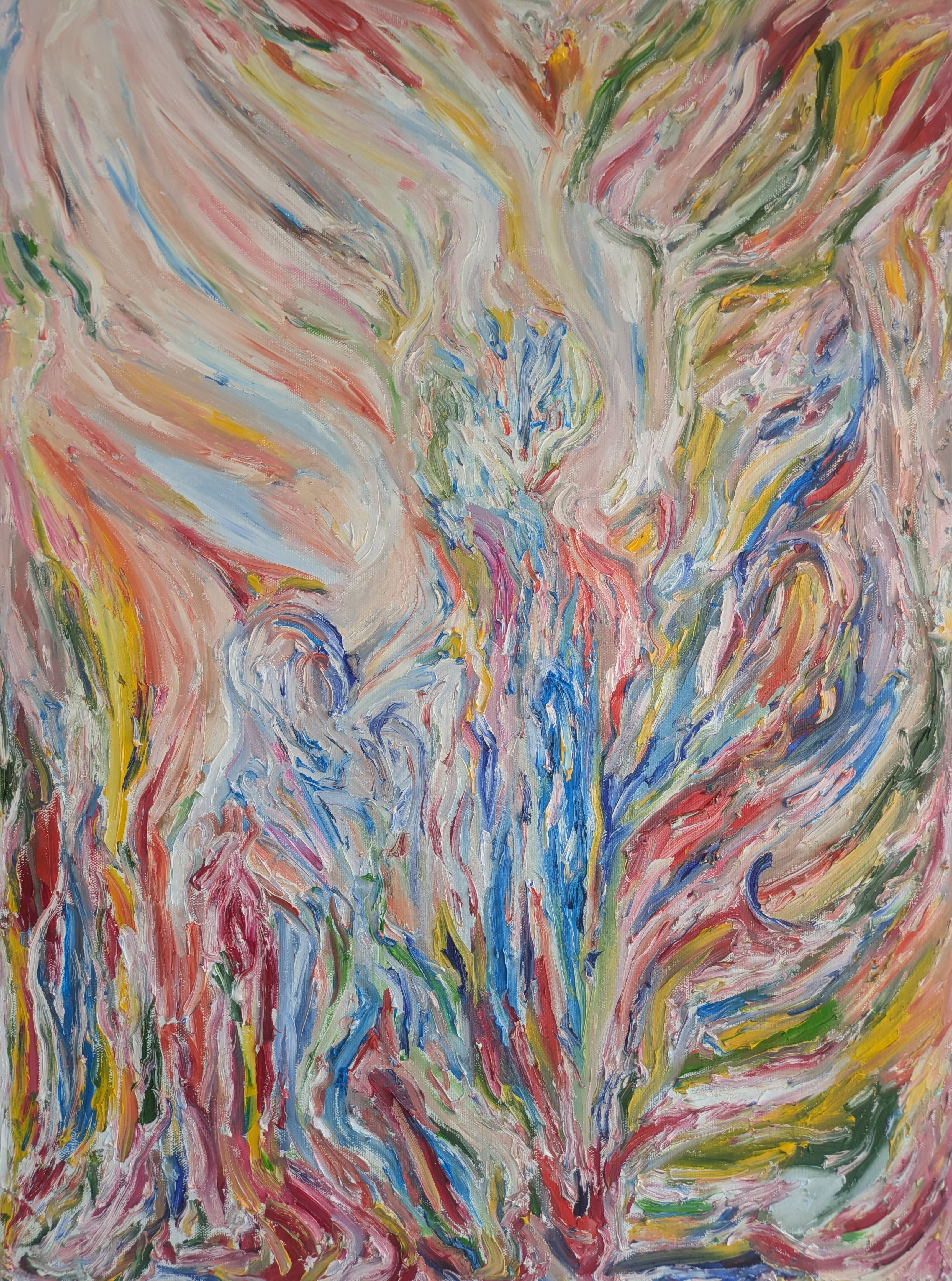
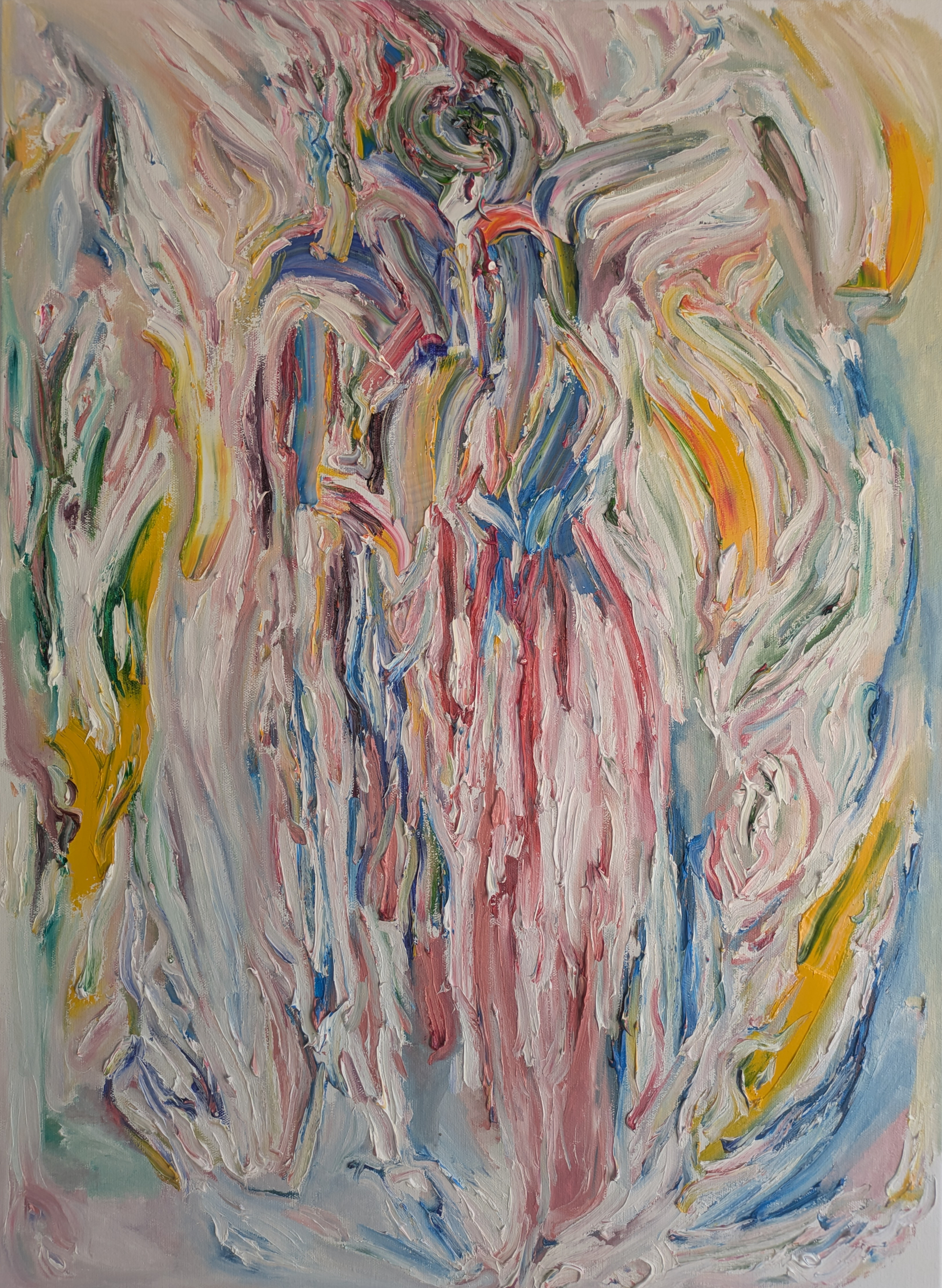
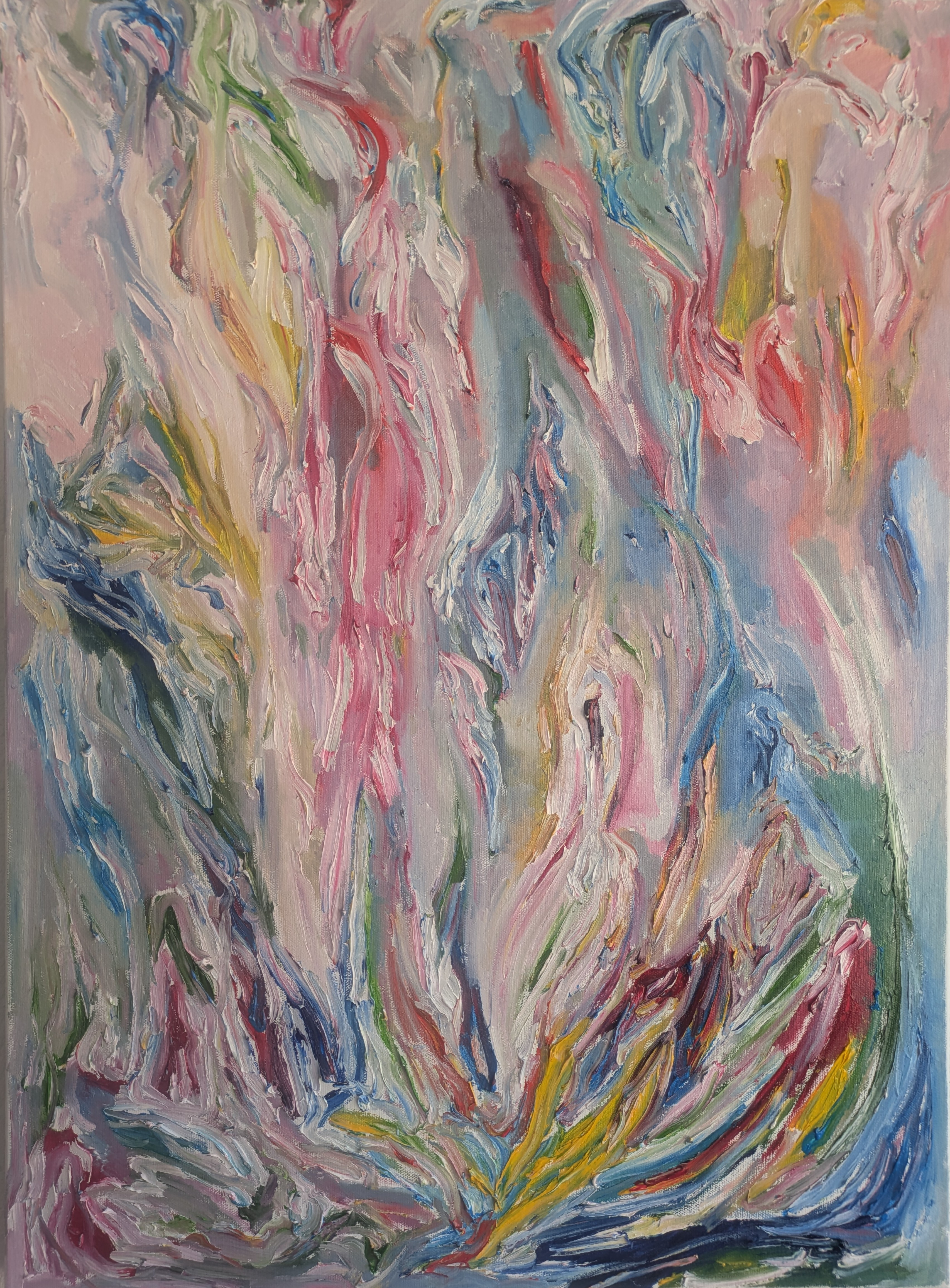
Triptych: Guérir · Le Temps · Atonal
Guérir — polychrome / high frequency
Le Temps — central pivot
Atonal — mineral / low frequency
“Healing time does not mean freezing it, but purging it of its teleology.”
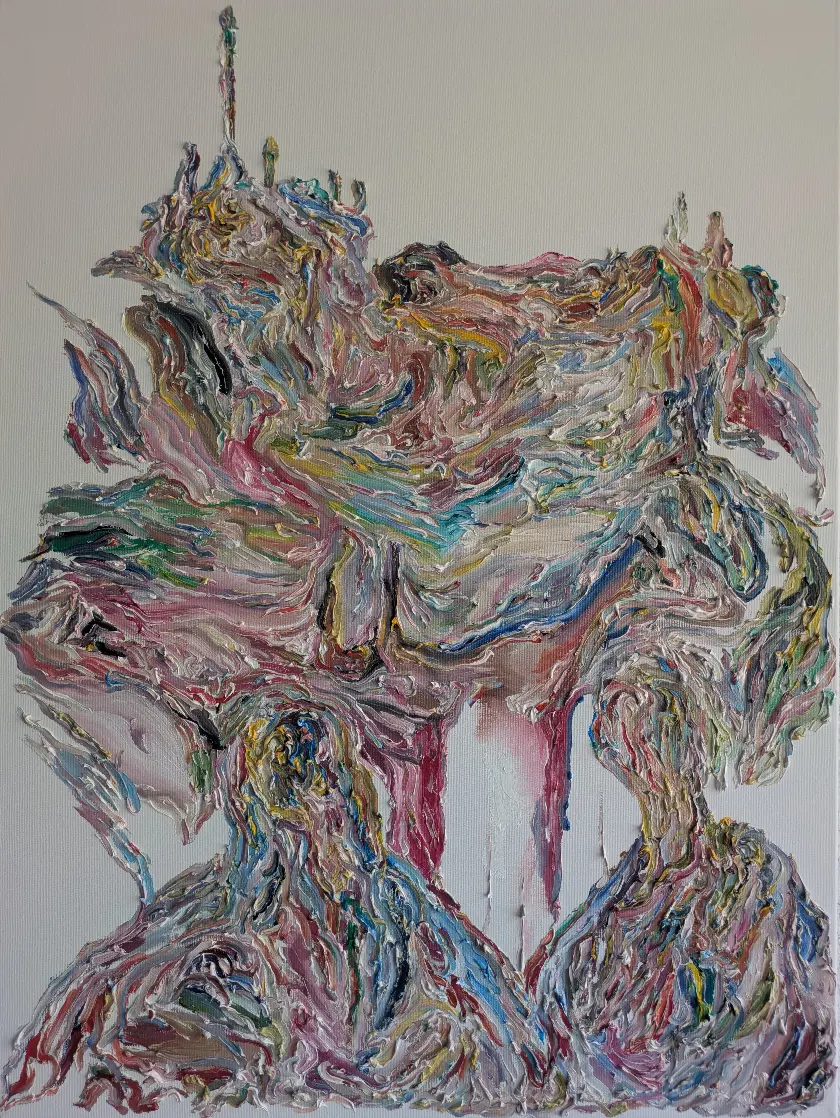
Oil on canvas, heavy impasto, knife-cut relief: Guérir le Temps Atonal pushes Subrealism's founding principle — form before form — into the register of duration itself. The triptych is no longer a fixed image but a determinism of creation observed from multiple angles, where matter is built to be re-read differently at every pass of light and every degree of rotation.
Three Temporal States
Horizontal — Landscape
Stretched-out time, continuous flux, vibratory wave across the classical frieze hang.
Vertical — Portrait
Erection, bodily presence, staccato rhythm after the 90° gravitational tilt.
Kinetic — Rotation
Atonal time released: the central panel turns, freed from any fixed reading.
The Atonal Clock — Scenographic Device
- Module 1 — The Static Frieze: classical horizontal hang, the triptych at rest.
- Module 2 — The Tilted Triptych: a 90° bascule into portrait format, breaking the work's relationship to gravity.
- Module 3 — The Central Kinetic Mechanism: a motorized rotation of Le Temps, running at 0.5–2 RPM with randomized pauses, visually liquefying the composition through movement.
Under raking light, the heavy impasto behaves as a moving haptic diagram: Guérir's polychrome surface fractures into shifting glare and colour, while Atonal's mineral relief slows into dense, near-monochrome shadow. Between the two, the rotating Le Temps panel carries the composition from high-frequency light down to low-frequency matter and back — a chronological arrow dissolved into a perpetual, self-renewing loop of plastic states.
Toward a Pure Duration — Conceptual Closure
Bergsonian durée holds that time is never a sequence of discrete instants but an
unbroken, qualitative flow — memory folding continuously into perception, an élan vital resistant
to all spatialization. The Deleuzian haptic diagram supplies the mechanism by which
that flow becomes visible in matter: not illustration, but chaos-germ, force before form,
the manual gesture interrupting optical convention to return the eye to touch. In
Guérir le Temps Atonal, the palette-knife relief is this diagram made
permanent — each ridge of oil impasto records a force that preceded any image, so that what the
viewer eventually sees is already, underneath, something the hand once felt.
This is where Merleau-Ponty enters as method rather than gloss. Before the rotating
central panel, the spectator does not observe kinetic movement from a fixed, disembodied vantage —
they undergo it. Raking light sweeping across knife-cut ridges converts sight into
haptic perception: the eye palpates the surface as a hand would, tracing the
polychrome vibration of Guérir's high frequency into the
mineral low frequency of Atonal. Vision here is corporeal before it is
representational.
This displacement completes the work's rupture with the Albertian window. The
classical frame — Portrait or Landscape, a fixed aperture organizing a world already composed for a
stationary eye — is teleological: it presumes an arrival, a correct angle, a finished reading. The
Liminal Framing that Treeskulltown inaugurates with The Atonal Clock refuses
that teleology outright, subjecting a single canvas to horizontal frieze, vertical bascule, and
unresolved kinetic rotation in turn, so that no orientation is ever the "true" one.
Time is healed, in the triptych's own terms, not by being stopped but by being purged of its
destination.
“Not Alberti's open window onto a world — but the canvas reconceived as a temporal membrane.”
It is this same gesture that the forthcoming book Fenestra Aperta will
theorize at length: the fenestra aperta displaced from static aperture to porous,
cinetic membrane, pulsing at 0.5–2 RPM between states rather than fixing one.
Guérir le Temps Atonal stands as that membrane's first working prototype —
Subrealism's Kinetic Temporality given its inaugural material form.